

Image make if IA
Overview
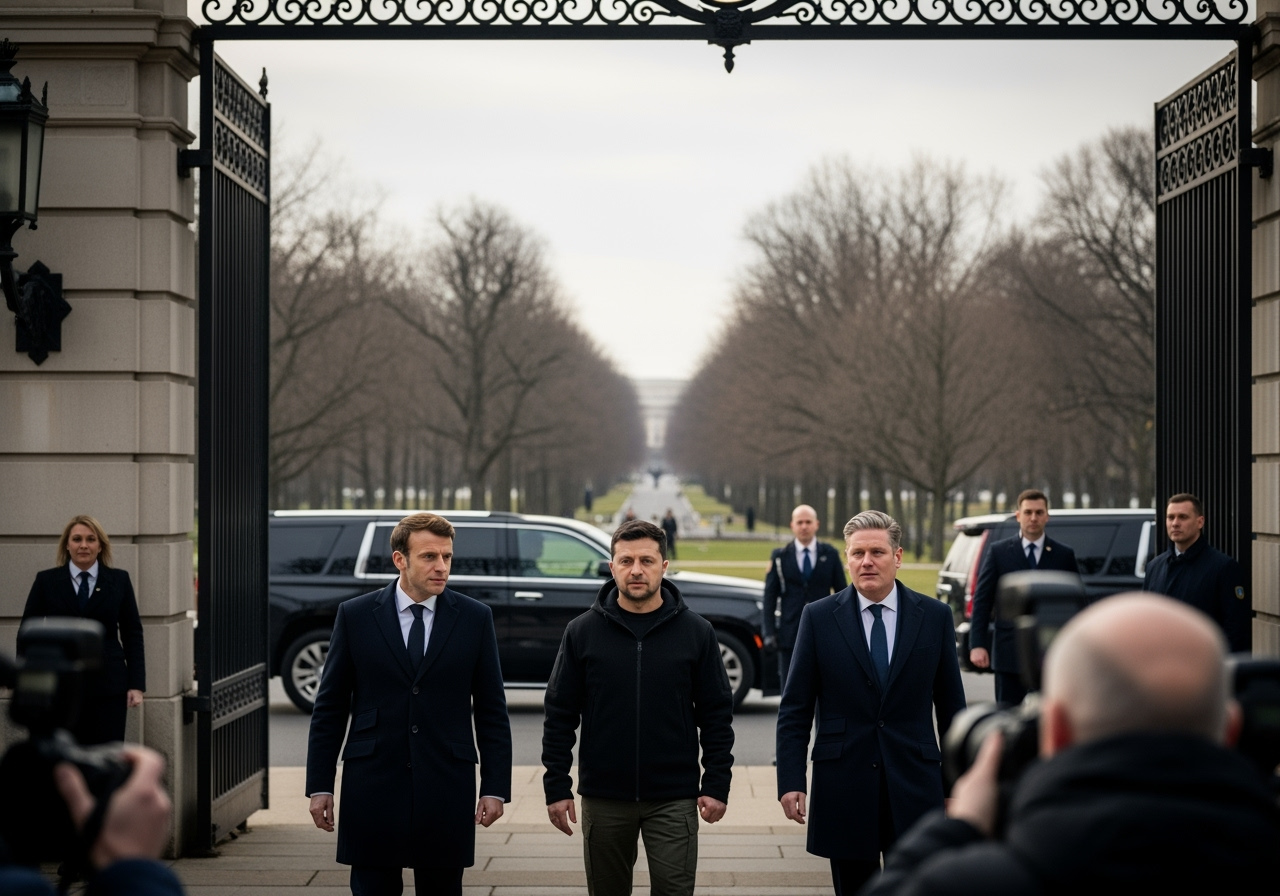
European leaders rushed to Washington on Monday to support President Volodymyr Zelensky and deter any repeat of tensions with the United States over Ukraine. Diplomats say the aim is less about shielding Zelensky from criticism and more about preventing a longer-term shift in European security under a changed American course.
What changed in Washington
After meeting Vladimir Putin in Alaska, US President Donald Trump signalled a shift away from the previous path of pressuring Russia through sanctions and demands for a ceasefire before talks. He also indicated he wouldn’t push new sanctions on Russia. That combination has raised concerns in Europe about a possible “capitulation” to Moscow and a weakening of Western unity on Ukraine.
Who travelled and why
France’s Emmanuel Macron and Italy’s Giorgia Meloni are among the leaders heading to Washington, with other European Union and NATO figures joining in. The delegation was assembled at short notice, described by officials as “unwieldy,” and involved several group chats over the weekend to align positions. Meloni reportedly invited herself to the talks, with Macron joining soon after.
Core aims in talks
European officials stress the discussions are not a gamble for confrontation but a bid to keep Ukraine strong and secure broader European security guarantees. The central questions are: how to ensure that peace cannot be divorced from Ukraine’s ability to defend itself, and what concrete, durable guarantees would backstop any settlement—beyond mere words.
US negotiators have floated security assurances reminiscent of NATO, but their meaning remains unsettled. A key tension is that any security guarantees would need to be credible and verifiable, not simply verbal commitments. In parallel, European allies are prepared to continue providing military and intelligence support to Ukraine, including weapons funded or supplied by Europe, to prevent any Russian demand for demilitarisation of Ukraine.
Risks and next steps
There is a risk that pushing too hard could provoke pushback from Trump, complicating talks rather than advancing them. The next phase could involve discussions on a broader framework for ending the war—potentially through a trilateral summit involving Trump, Zelensky, and Putin—or at least the outlining of general principles for a future deal and where negotiations might take place. Many in Europe want progress on any framework first, ideally tied to a form of ceasefire that allows talks to proceed.
In sum, the visit underscores Europe’s attempt to balance urgency with prudence: sustain Kyiv’s security, avoid a capitulation, and press for a credible, long-term security arrangement for the continent.
Source: Full Article BBC




Leave a Reply