
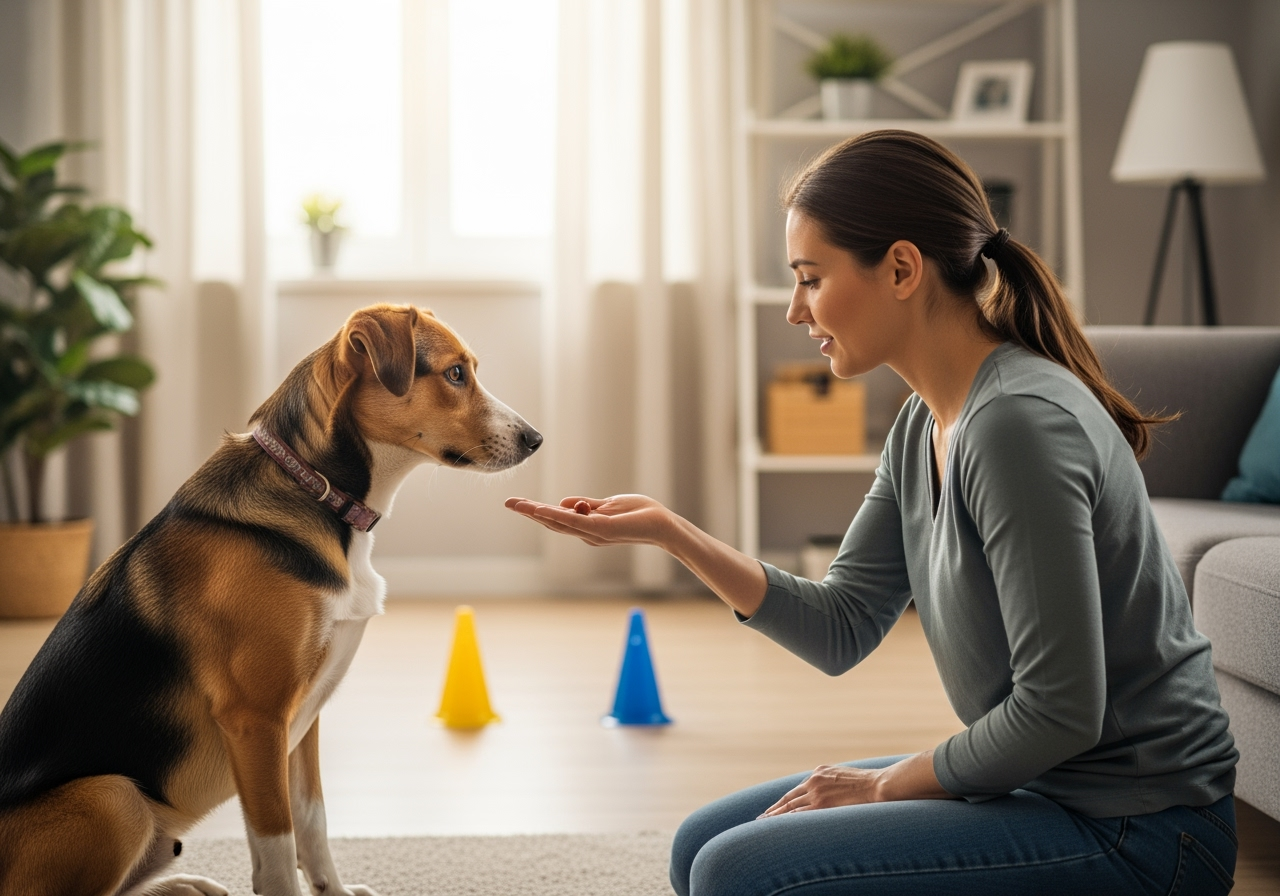

Teaching tricks is more than impressive party skill—it’s a daily dialogue with your dog. When you structure tiny, joyful learning moments, your dog gains confidence, focus, and real trust in you as a trainer and companion. Here’s a practical guide to simple techniques that work in real life, not just in the ideal training corner.
Foundation first: motivation, timing, and a calm environment

The best tricks start with the right mindset. Dogs learn best when they’re excited but not overwhelmed. High-value rewards—tiny bits of cooked chicken, cheese, or your dog’s favorite kibble—make the difference between a quick try and a repeat performance. Pair rewards with precise timing: the moment your dog does the action you want, you mark it and then reward. That tiny pause—mark, reward, pause—makes the brain connect the cue with the outcome.
Think of training like a short conversation. A few sentences, a clear signal, a moment of feeling successful, then a break. A daily routine helps your dog anticipate learning rather than resist it. For example, a 5–8 minute session after breakfast or before a leisurely walk is plenty to start a trick or two, especially if you end on a high note.
- Keep sessions to a digestible length (5–8 minutes). Your dog’s attention wanes quickly, and lengthier sessions often lead to frustration.
- End each session with a simple success your dog can repeat, then a short, calm pause before the next activity.
Luring, shaping, and marker-based training: building new tricks step by step

Three core techniques work beautifully together. Luring uses a treat to guide your dog into the desired movement. Shaping rewards small, incremental improvements, so your dog learns a sequence of tiny steps rather than one big leap. A marker—either a clicker or a fixed word like “Yes!”—pinpoints the exact moment the dog earned the reward, creating clear communication between you.
In practice, you might begin a new trick by using a treat to lure your dog into the initial action, then gradually remove the lure as the behavior becomes reliable. If you don’t have a clicker, a consistent word can serve as your marker, followed immediately by the reward. This approach makes learning feel like a game rather than a test.
- Choose a clear cue and a high-value reward. Use the marker the moment the action is completed, then reward.
- Reward approximations early and often. If your dog noses toward the treat but stops short of the full action, mark that small success and continue shaping.
- Practice in small, low-distraction environments first, then gradually add mild distractions as your dog improves.
A simple trick ladder: Sit to spin and beyond

- Step 1 — Sit on cue with a two- to three-second stay: Objective guidance. Show a hand cue or toy near your dog’s nose, then say the cue “Sit.” When your dog sinks into a sit, mark and reward immediately, reinforcing the position for a short hold. If your dog leaps to stand, reduce distance to you or lower the lure until the sit comes reliably.
- Step 2 — Add a second element and a gentle challenge: Objective guidance and notes. Once sit is steady, introduce a second action such as “spin.” Use a treat to guide the dog in a circle, and mark the moment the circle completes. Reward and slowly extend the duration the dog stays in the position, or add a slight distance from you before cueing the spin.
- Step 3 — Generalize and maintain as part of daily life: Ongoing care and routine. Practice the combination in different rooms, with mild distractions, and at different times of day. Keep sessions short, celebrate small successes, and gradually increase the challenge by adding duration, distance, or a new cue (e.g., “Spin twice” or “Spin, then sit”). This ladder approach helps your dog connect the cue with the action across contexts, turning a single trick into a reliable behavior that shows up in everyday life.
Common mistakes and quick fixes: myths, truths, and practical tips

- Mistake: Punishing mistakes or scolding slows learning and damages trust. Right approach: stay calm, reset to an easy step, and re-try with a fresh treat reward. Small wins build confidence.
- Mistake: One trick and done. Right approach: repeat the trick in multiple short sessions and different rooms to help generalization.
- Quick tip: If your dog loses focus, switch to a quick, easy trick, then return to the current one after a short break to keep the experience positive.




Leave a Reply