


Aging well is less about chasing miracles and more about building a simple, enjoyable daily routine. Small choices, repeated day after day, compound into stronger energy, better mood, and lasting independence. Here are ten daily habits that support healthy aging after 60, explained in practical terms you can start today.
[Sleep and Recovery — The quiet foundation of daily energy]
![10 Daily Habits for Healthy Aging After 60 — [Sleep and Recovery — The quiet foundation of daily energy]](https://i0.wp.com/thewolrdtimes.com/wp-content/uploads/2025/08/sleep-and-recovery-the-quiet-foundation-of-daily-energy.png?ssl=1)
Quality sleep is the quiet engine behind mood, memory, and mobility. When rest is solid, mornings feel calmer, cravings are easier to manage, and your joints move with less stiffness.
In practice, aim for a consistent schedule and a calm bedtime routine. A good night’s sleep translates into sharper thinking, steadier balance, and more patience for the day ahead.
- Establish a regular sleep window: go to bed and wake up at the same time every day.
- Create a restful environment: cool, dark, quiet, and free from bright screens an hour before bed.
[Move Daily with Purpose — Gentle movement that respects joints and balance]
![10 Daily Habits for Healthy Aging After 60 — [Move Daily with Purpose — Gentle movement that respects joints and balance]](https://i0.wp.com/thewolrdtimes.com/wp-content/uploads/2025/08/move-daily-with-purpose-gentle-movement-that-respects-joints-and-balance.png?ssl=1)
Daily movement keeps your heart healthy, supports bones, and preserves balance. It’s not about pushing through pain; it’s about steady, enjoyable activity you can sustain.
A simple routine can be two parts: a moderate walk and two short strengthening sessions each week. If you have pain or dizziness, adjust pace and consult a clinician.
- Include balance and strength moves a few times per week (chair squats, calf raises, light resistance).
- Bookend meals with a short walk after eating to aid digestion and energy.
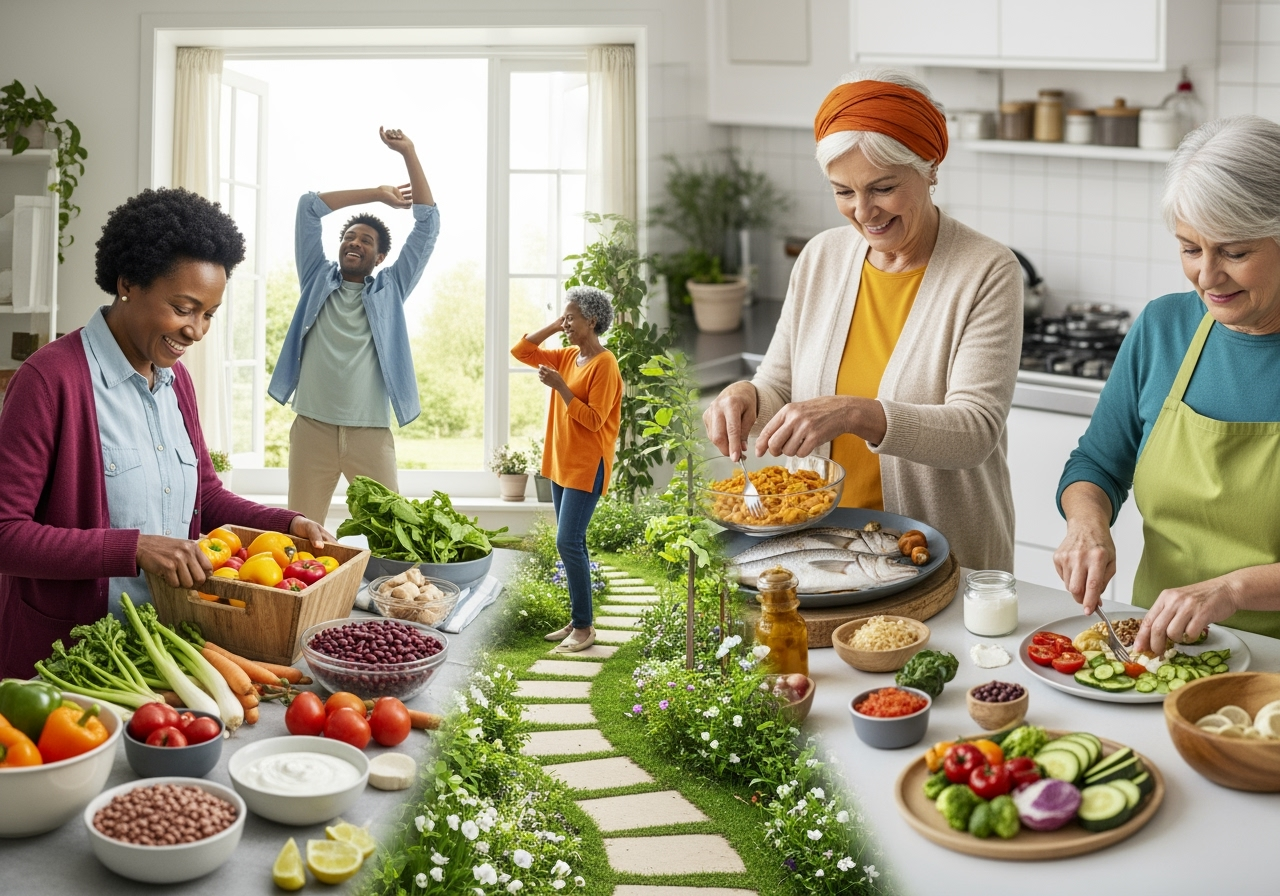
[Eat for Vitality — Nourishing meals that fuel every day]
![10 Daily Habits for Healthy Aging After 60 — [Eat for Vitality — Nourishing meals that fuel every day]](https://i0.wp.com/thewolrdtimes.com/wp-content/uploads/2025/08/eat-for-vitality-nourishing-meals-that-fuel-every-day.png?ssl=1)
Nutrition matters more than ever. Protein helps preserve muscle; fiber supports digestive health; colorful produce provides vitamins and antioxidants that support aging cells.
Think of meals built around protein, produce, and whole grains, with healthy fats on the side. It’s not a diet so much as a pattern you can enjoy and maintain.
- Center meals on a protein source (fish, poultry, beans) and fiber-rich vegetables; vary choices to cover essential amino acids and micronutrients.
- Hydrate throughout the day and limit ultra-processed foods; treats fit in moderation, not by default.
[Hydration and Digestive Harmony — Water as your daily ally]
![10 Daily Habits for Healthy Aging After 60 — [Hydration and Digestive Harmony — Water as your daily ally]](https://i0.wp.com/thewolrdtimes.com/wp-content/uploads/2025/08/hydration-and-digestive-harmony-water-as-your-daily-ally.png?ssl=1)
Even mild dehydration can sap energy and mood. The aging body often signals thirst less clearly, so proactive sipping matters.
Carry a water bottle, set gentle reminders, and pair fluids with meals to support digestion and gut health.
- Target about 6–8 cups of fluids daily, adjusting for climate, medications, and activity level.
- Include yogurt, yogurt drinks, or fermented foods to support gut balance alongside fiber-rich foods.
[Social Connections and Purpose — Bonding with others keeps spirit lively]
![10 Daily Habits for Healthy Aging After 60 — [Social Connections and Purpose — Bonding with others keeps spirit lively]](https://i0.wp.com/thewolrdtimes.com/wp-content/uploads/2025/08/social-connections-and-purpose-bonding-with-others-keeps-spirit-lively.png?ssl=1)
Loneliness can sneak in with retirement or quieter days, but connection acts like a daily vitamin for mood and cognition. Relationships give meaning and motivation to keep moving, learning, and exploring.
Make social time non-negotiable: call a friend, join a club, or volunteer in a setting that suits your interests.
- Schedule regular interactions with family, neighbors, or community groups to maintain a sense of belonging.
- Choose activities that provide purpose, such as mentoring, teaching a skill, or helping in a local project.
[Brain Fitness and Lifelong Learning — Keep the mind curious and sharp]
![10 Daily Habits for Healthy Aging After 60 — [Brain Fitness and Lifelong Learning — Keep the mind curious and sharp]](https://i0.wp.com/thewolrdtimes.com/wp-content/uploads/2025/08/brain-fitness-and-lifelong-learning-keep-the-mind-curious-and-sharp.png?ssl=1)
The brain thrives on novelty and consistent challenge. Small daily mental workouts build cognitive reserve and keep thinking flexible as years advance.
Mix reading, puzzles, and new skills—whether a language app, a musical instrument, or a short online course. Curiosity itself is a powerful exercise.
- Set a daily brain task for 15–20 minutes—crosswords, memory games, or learning a new topic.
- Alternating topics and formats keeps memory and attention sharp while keeping learning enjoyable.
[Safety and Fall Prevention — Create a safer home and daily routine]
![10 Daily Habits for Healthy Aging After 60 — [Safety and Fall Prevention — Create a safer home and daily routine]](https://i0.wp.com/thewolrdtimes.com/wp-content/uploads/2025/08/safety-and-fall-prevention-create-a-safer-home-and-daily-routine.png?ssl=1)
Falls are a leading risk for older adults, but you can reduce that risk with thoughtful changes in daily life and environment.
Small upgrades and mindful habits add up: better lighting, sturdy footwear, and clear pathways make daily living safer and more confident.
- Improve lighting, remove loose rugs, and place non-slip mats in bathrooms and kitchens.
- Use grab bars where needed and wear supportive, well-fitting shoes with good tread.
[Skin, Sun, and Self-Care — Protecting the body you’re aging into]
![10 Daily Habits for Healthy Aging After 60 — [Skin, Sun, and Self-Care — Protecting the body you’re aging into]](https://i0.wp.com/thewolrdtimes.com/wp-content/uploads/2025/08/skin-sun-and-self-care-protecting-the-body-you-re-aging-into.png?ssl=1)
Daily skin care and sun protection slow photoaging and lower cancer risk. Thoughtful grooming supports confidence and comfort.
Consistent protection and care add up to healthier skin and a more comfortable routine outdoors.
- Apply broad-spectrum sunscreen SPF 30+ daily, even indoors near windows; reapply as needed when outdoors.
- Moisturize, wear a hat and sunglasses, and monitor changes in moles or new skin spots with regular self-checks.
[Oral Health — A healthy smile supports overall well-being]
![10 Daily Habits for Healthy Aging After 60 — [Oral Health — A healthy smile supports overall well-being]](https://i0.wp.com/thewolrdtimes.com/wp-content/uploads/2025/08/oral-health-a-healthy-smile-supports-overall-well-being.png?ssl=1)
A good mouth sets the stage for comfortable eating, speech, and social ease. Dental care sticks with you every day.
Establish a simple, effective routine and keep up with visits to the dentist.
- Brush twice daily and floss daily; schedule dental checkups every 6–12 months unless advised otherwise.
- If you wear dentures or implants, clean them daily and follow professional care guidance to maintain fit and function.
[Routine Health Care — Proactive management of medications, vaccines, and screenings]
![10 Daily Habits for Healthy Aging After 60 — [Routine Health Care — Proactive management of medications, vaccines, and screenings]](https://i0.wp.com/thewolrdtimes.com/wp-content/uploads/2025/08/routine-health-care-proactive-management-of-medications-vaccines-and-screenings.png?ssl=1)
Being proactive with health means fewer surprises and more control over your days. A clear record of health, medications, and vaccines supports safer aging.
Keep things organized and shared with your care team to avoid conflicts and missed needs.
- Review medications with a clinician every 6–12 months and after starting any new prescription.
- Stay up-to-date with vaccines and age-appropriate screenings; keep a current health list for emergencies and visits.
Conclusion
Small, consistent choices compound over years. Start with one habit today, then add another tomorrow. By designing a daily routine you enjoy, healthy aging becomes a joyful, sustainable journey toward greater independence and vitality.
Main Questions
- Question 1: What are 10 daily habits for healthy aging after 60? Answer: Sleep and recovery; moving daily with purpose; eating for vitality; hydration and digestive health; social connections and purpose; brain fitness; safety and fall prevention; skin and sun protection; oral health; routine health care. These ten practices, followed consistently, support energy, independence, and mood.
- Question 2: How much exercise do older adults need daily? Answer: Aim for about 150 minutes of moderate activity per week, plus two days of strength training. Break it into 20–30 minute sessions most days, and tailor intensity to your abilities with professional guidance if needed.
- Question 3: What foods support aging well? Answer: Prioritize lean protein, high-fiber vegetables and whole grains, healthy fats, and varied colors on your plate. Hydration, limited highly processed foods, and mindful portion sizes also help sustain energy and health.
- Question 4: How can I prevent falls at home? Answer: Reduce trip hazards, improve lighting, use non-slip mats, and wear supportive footwear. Install grab bars in key areas and have a plan for moving safely with any mobility aids you use.
- Question 5: How often should older adults have medical checkups? Answer: Schedule regular primary care visits, at least annually, and more often if you have chronic conditions. Bring a current med list, review with your clinician every 6–12 months, and stay on top of vaccines and screenings.



Leave a Reply